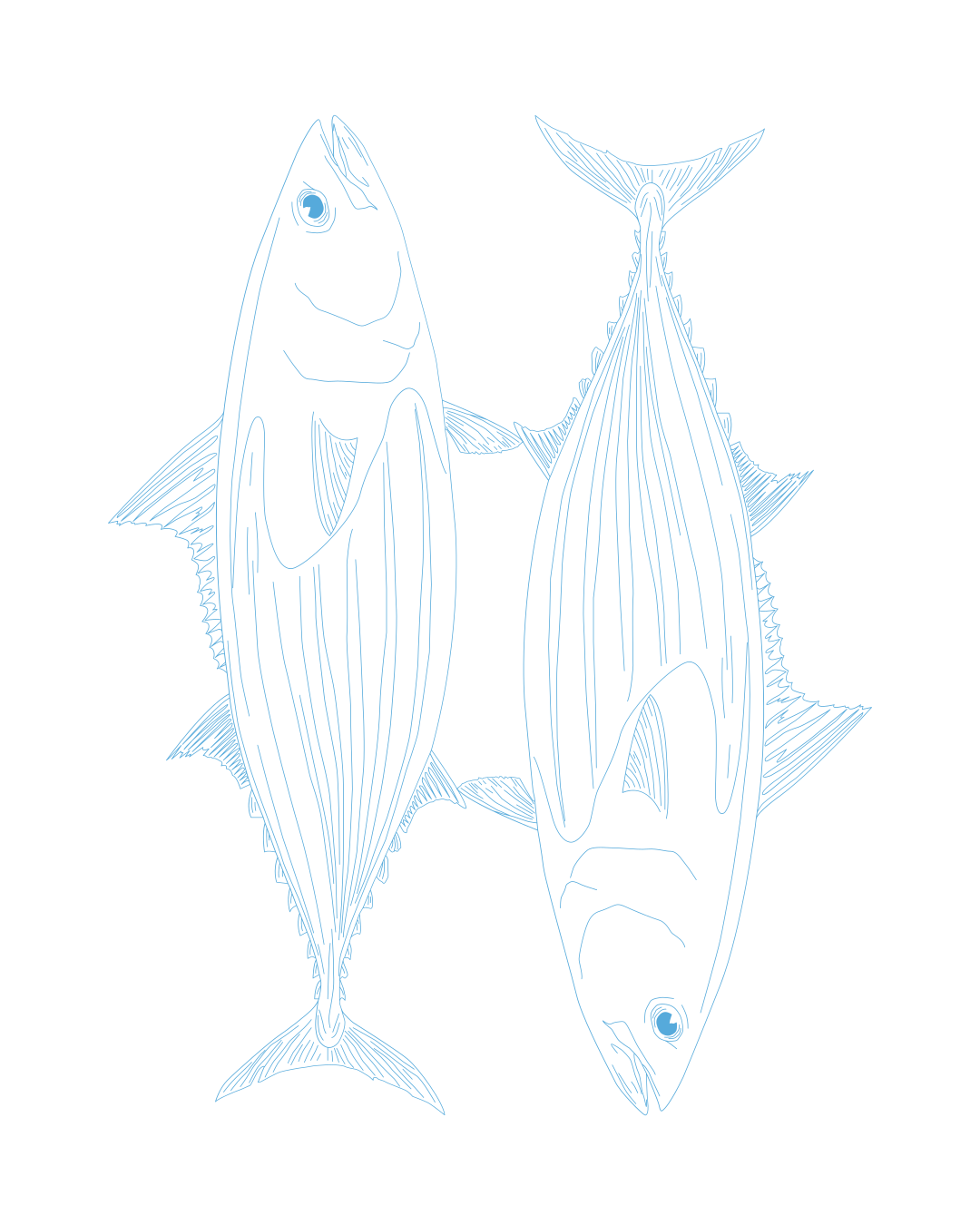



Smoked Albacore in Fine Dining: A Quiet Comeback
Smoked albacore is reappearing on fine dining menus — not as a novelty, but as a disciplined ingredient. Its firm texture, subtle richness, and layered flavor profile allow chefs to introduce depth without heaviness. In an era where restraint is replacing excess, smoked wild Pacific albacore is finding its way back onto plates with intention rather than spectacle.
From Pantry Staple to Composed Plate
For years, smoked tuna was largely confined to specialty shops, delis, orcasual preparations. Fine dining often leaned toward raw or lightly seared tunacuts, reserving smoke for other proteins.
That boundary has softened.
Chefs are revisiting traditional techniques — curing, fermenting, smoking— not as trends, but as tools. Smoking introduces complexity without relying onheavy sauces or elaborate construction. When applied carefully to wild Pacificalbacore, it enhances structure rather than disguising it.
The shift is subtle, but noticeable.
Why It Works in Modern Menus
Modern fine dining is less about volume and more about balance. Platesare cleaner. Ingredients are treated with more respect. Seasoning is measuredrather than overwhelming.
Smoked albacore fits into that framework naturally.
Its firm loins allow for precise slicing or flaking. The smoke integratesinto the natural oils of the fish, creating depth that lingers withoutdominating. When paired with acidity — citrus, pickled vegetables, restrainedvinaigrettes — it creates contrast rather than weight.
It does not need to shout to be noticed.
Structure That Holds Under Technique
In composed dishes, structural integrity matters. Smoked albacore sourcedfrom cold Pacific waters maintains defined flakes and muscle density. Thatstructure allows it to be plated intentionally, whether layered over warmvegetables, paired with legumes, or integrated into small plates.
Unlike softer tuna preparations, it does not collapse into thebackground.
Chefs value ingredients that hold their shape under minimal intervention.Smoked albacore rewards that restraint.
Flavor Without Excess
Smoke can easily overwhelm a dish if applied aggressively. In disciplinedkitchens, it is used as an accent rather than a mask.
Gently smoked wild Pacific albacore provides depth that complementsrather than competes. The fish retains its natural character while gaining anadditional layer of complexity.
This approach aligns with contemporary fine dining’s emphasis on clarity.Each component remains identifiable. Nothing is buried beneath technique.
Flavor should unfold, not overpower.
A Conversation About Sourcing
Fine dining menus increasingly include sourcing language alongside dishdescriptions. Guests want to know where ingredients originate and how they wereharvested.
Smoked albacore sourced from hook-and-line caught wild Pacific fisheriesprovides specificity. That specificity supports menu transparency withoutrequiring theatrical explanation.
When an ingredient carries a clear origin and disciplined preparation, itfits naturally into restaurants that prioritize ingredient integrity.
Sourcing and technique reinforce each other.
Beyond Nostalgia
The renewed presence of smoked albacore is not about nostalgia forpreserved fish traditions. It reflects a broader culinary recalibration.
As chefs move away from excess and toward ingredient-first thinking,preserved methods that enhance rather than disguise are returning. Smoking,when done with restraint, aligns with that philosophy.
Smoked albacore is not replacing raw tuna on tasting menus. It isoffering an alternative expression — one that emphasizes depth, texture, andcontrol.
It is a quiet return, not a loud trend.
Where Hookd Fits In
Hookd Foods prepares smoked wild Pacific albacore with restraint. Theobjective is not to overwhelm the fish, but to preserve its structure whileadding subtle depth.
Because the starting point is hook-and-line caught albacore harvestedwithin regulated Pacific fisheries, the integrity of the fish remains intactthrough smoking. That structural clarity is what allows chefs to use itconfidently in composed plates and refined preparations.
When the base ingredient is disciplined, the final dish can remainsimple.
The Bottom Line
Smoked albacore is reentering fine dining because it performs quietly andconsistently. Its firm texture supports plating. Its balanced fat profilecarries smoke without heaviness. Its sourcing transparency aligns with modernculinary values.
The comeback is not dramatic. It is measured.
And in today’s kitchens, measured often wins.
FAQ
Is smoked albacore suitable for fine dining menus?
Yes. When gently prepared and responsibly sourced, smoked albacore offersstructure and depth that complement contemporary, ingredient-focused cuisine.
How is smoked albacore different from raw tuna dishes?
Smoked albacore provides layered flavor and firmer texture, while raw tunaemphasizes freshness and delicacy. They serve different culinary purposes.
Does smoking affect the quality of the fish?
When done with restraint, smoking enhances flavor while preserving the fish’sstructural integrity and nutritional profile.

HAVE A QUESTION?
We’re here. Ask away.