

How to Read a Seafood Label (Without Getting Misled)
Seafood labels often contain terms that sound reassuring — wild-caught, sustainable, premium, responsibly sourced — but not all labels carry the same weight. Understanding what specific language means, and what it does not mean, helps you make informed decisions without relying on marketing shorthand. The key is knowing where to look and which details actually matter.
Start With the Species
The most important detail on any seafood label is the species.
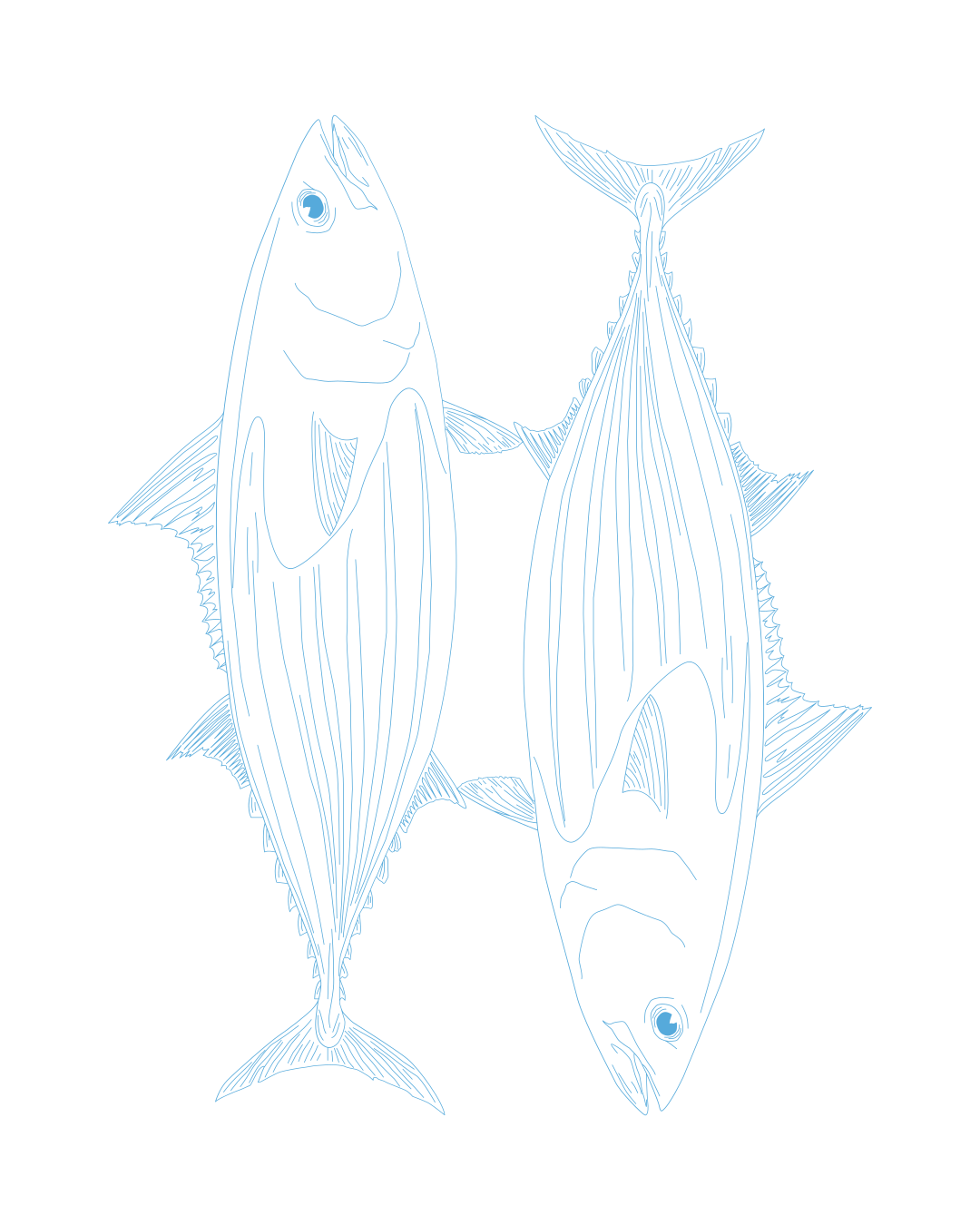
“Tuna” alone is not specific. There are multiple tuna species, each with different size, migration patterns, fat composition, and management structures. Albacore, skipjack, yellowfin, and bluefin are not interchangeable.
If the label does not clearly identify the species, that is the first signal to slow down.
Specificity builds trust. Vague labeling reduces clarity.
Wild-Caught vs Farmed
“Wild-caught” indicates the fish was harvested from its natural ocean environment. “Farmed” or “aquaculture” indicates it was raised ina controlled system. Neither term automatically guarantees quality or sustainability.
What matters is how the fish was managed.
For wild-caught products, look for information about region or fishery. For farmed products, transparency about origin and farming practices matters. Labels that provide detail beyond the headline term are generally more informative.
If the label stops at a broad claim, it may be relying on assumption rather than explanation.
Understand the Fishing Method
Few seafood labels list harvesting methods, but when they do, it can be meaningful.
Terms like “hook-and-line caught” indicate fish were harvested individually rather than in bulk net systems. This method often reduces bycatch and preserves structural integrity. Other methods, such as purse seine or longline, may be used in different fisheries and carry different environmental considerations.
Method alone does not tell the full story, but it adds context.
When available, it is worth noting.
Look Beyond “Sustainable”
“Sustainable” is one of the most commonly used words in seafood marketing. It can indicate alignment with certain fishery management standards, but it is not a regulated universal term.
Certifications from recognized third-party organizations may provide additional verification. However, certification alone does not guarantee perfection, and absence of certification does not automatically indicate poor practice.
The most reliable labels often combine certification with clear geographic and method transparency.
Sustainability is stronger when it is specific.
Ingredient Lists Matter
In packaged seafood, the ingredient list should be straightforward.
For canned or pouched tuna, look for fish, water or oil, and salt. Longer ingredient lists with additives, flavor enhancers, or preservatives may not align with expectations of simplicity.
Reading the ingredient list takes seconds, but it provides more clarity than any front-of-package claim.
Simple ingredients are easier to evaluate.
Region and Traceability
Country of origin can provide insight into regulatory oversight and fishery management systems. While region alone does not determine quality, transparency about where the fish was harvested or processed signals accountability.
Labels that identify a specific ocean region, such as the Pacific, offer more context than generic global sourcing.
Traceability supports trust.
Nutrition Panel: Context Matters
Protein, sodium, and fat content should be evaluated in context.
Albacore naturally contains omega-3 fatty acids, which contribute to its fat profile. Smoked or salted preparations may contain more sodium depending on seasoning. Comparing similar products side by side can clarify differences.
Nutrition panels provide measurable information. The key is interpreting it relative to preparation method and portion size.
Marketing Language vs Measurable Facts
Words like “premium,” “artisan,” and “quality” are descriptive but not quantifiable. They communicate positioning, not data.
Labels that combine clear species identification, region, fishing method, and minimal ingredients provide measurable information rather than relying solely on descriptive language.
When evaluating seafood, measurable facts carry more weight than adjectives.
Where Hook'd Fits In
Hookd Foods identifies species, region, and method clearly. Wild Pacific albacore is labeled as such. Hook-and-line caught sourcing is stated explicitly. Ingredient lists remain simple.
The goal is not to overwhelm the label with claims, but to provide enough clarity that the product can stand on its own.
Specificity reduces confusion.
The Bottom Line
Reading a seafood label without getting misled comes down to looking past broad claims and focusing on concrete details. Species, region, fishing method, ingredient list, and nutrition panel provide the clearest insight into what you are actually buying.
Transparency does not require complexity. It requires specificity.
When labels are clear, decisions become easier.
FAQ
What should I look for on a tuna label?
Look for the specific species, region of origin, fishing method if listed, and a simple ingredient list.
Does “wild-caught” automatically mean sustainable?
Not necessarily. Wild-caught indicates origin, but sustainability depends on fishery management and harvesting practices.
Are certifications required for seafood to be responsibly sourced?
Certifications can provide additional verification, but transparency about species, region, and method is equally important.

HAVE A QUESTION?
We’re here. Ask away.